A few days ago, Jürgen Habermas passed away. He was one of the major philosophers of our time, and two years ago (2024) he was awarded the Skytte Prize for his outstanding contributions, for having “constantly reminded us, theoretically and empirically, that the very lifeblood of democracy depends on human capacity and willingness to respect others by means of communicative action and on that basis to engage in critical argumentation and discourse”.
One of his insights that I have tried to take to heart is to listen to the argument itself, regardless of who is making it.
Another concerns the trust between us: the way in which society is based on our ability to agree and to trust one another, and that trust in turn depends on daring and being able to speak honestly.
Many people bear witness to Habermas’s great significance. I believe that the most important thing we can do to honour his memory is to try to take his message to heart.
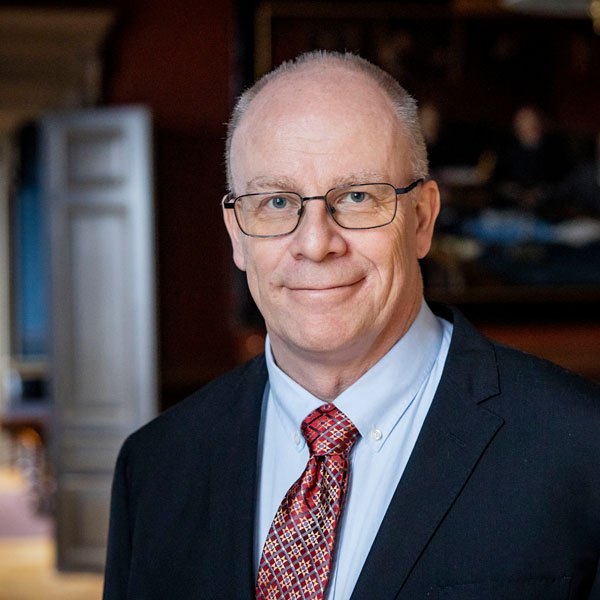
I have asked Li Bennich-Björkman, holder of the Skytte Chair at the Department of Government and chair of the Skytte Prize Committee, to write a guest blog post about Habermas, his influence on the world, politics, philosophical and political discourse, and Uppsala University.
Surrounded by – language and discourse: the legacy of Habermas
A long time ago, I read The Structural Transformation of the Public Sphere. The title was not exactly inviting, but the analysis of the emergence of a reading, writing and discussing bourgeoisie in Western Europe from the 18th century onwards made a lasting impression on me. In the discussions that began to take place in bourgeois society as the power of the church and the court waned during the 18th century, people sought to connect with one another and acquaint themselves with each other’s worldviews. The emergence of this type of dialogue is closely linked to the growth of literacy and the ability to engage with texts in the press and literature. Language is the unique human means of communication.
The author, Jürgen Habermas, passed away last week. In 2024, he was awarded the Johan Skytte Prize in Political Science. He was 94 at the time, still active as a writer and, in his native Germany, a giant of a public intellectual – ‘the philosopher’, quite simply. Would he come to Uppsala to receive the award? Would he be up to it? Those of us involved in the award fervently hoped so. Many people contacted us, keen to be there in the Grand Auditorium and listen to him. Habermas was a giant in Sweden too; he had influenced several generations of scholars and intellectuals across a range of disciplines.
Jürgen Habermas was born in 1929. He had a cleft palate and underwent surgery immediately after birth. When he was five, he had another operation. The outcome was better, but he retained a speech impediment all his life. This seems to have led him, from an early age, to reflect on the importance of verbal communication – the way in which people connect with one another and achieve genuine understanding, and sometimes mutual recognition.
As with so many other award winners, there is often a link between personal experience and the research questions a person asks. Many decades later, these experiences found expression in his magnum opus The Theory of Communicative Action. Here, he draws a clear distinction between an instrumental approach to communication – intended to persuade – and communicative action, which aims to understand the other person’s starting point, their questions, criticisms or beliefs.The instrumental approach can be exemplified by Simona Mohamsson’s repeated declaration: “We are taking responsibility for Sweden.” If she had just once added: “And now I’d like to know what you, my members, think,” that would have changed the situation. According to Habermas, this could constitute the beginning of non-hierarchical communication aimed at bringing people closer together.
Habermas’s long life meant that he personally experienced much of Germany’s and Europe’s modern history. Born in 1929, at a time when the Nazis were gaining strength and their leader Adolf Hitler was soon to become Chancellor, he was a child during the period of increasing Nazi brutality. In the post-war period, Germany was a devastated and morally compromised country that only began to come to terms with its own history after many years had passed. The bloody revolt of the 1970s, epitomised by the Baader-Meinhof Group, was directed against the silence of the older generation and demonstrated what a lack of communication could lead to. However, Habermas also witnessed the almost miraculous transformation of German political culture which made the country a leading force in the peace project that is the European Union. It is therefore entirely reasonable to describe Habermas as a European.
He was shaped not only by history, but also by a European intellectual tradition that now almost feels like a distant memory – a tradition in which disciplinary boundaries were not dominant, but in which a more holistic view of knowledge about humanity and its condition prevailed. Remaining faithful to this tradition, which draws on thinkers such as Karl Marx, Émile Durkheim, Max Weber and Norbert Elias, Habermas made decisive contributions to our understanding of both the emergence of the European public sphere and the question of what ultimately makes democracy possible.
Jürgen Habermas never made it to Uppsala. He had bought a ticket, but at the last minute his wife fell ill. When we spoke, his disappointment struck me as genuine. In the Grand Auditorium, it was his granddaughter, Antonie Habermas, who accepted the award on his behalf. She read the speech he had prepared to a moved and solemn audience.
I will let Jürgen Habermas’s own words bring these reflections to a close. His deep concern that the vibrant and thoughtful public sphere which breathes life into democracy is withering away is evident:
“In such a public sphere, it must be possible for a range of competing yet sufficiently well-founded and carefully considered public opinions to emerge on relevant issues that require political decisions. Today, even the historical forms in which national public spheres have developed are beginning to break down. They are no longer inclusive, but risk disintegrating into fragmented and specialised public spheres that are either torn apart on a global scale or semi-privatised at a local level.
“The deliberative aspect of the democratic decision-making process is currently under threat from another quarter as well. I am referring to the phenomenon of right-wing populism, which still appears to be on the rise in the US and in the core countries of old Europe. But rather than jumping to conclusions, we should acknowledge that we have not yet fully grasped this worrying phenomenon.”
Li Bennich-Björkman